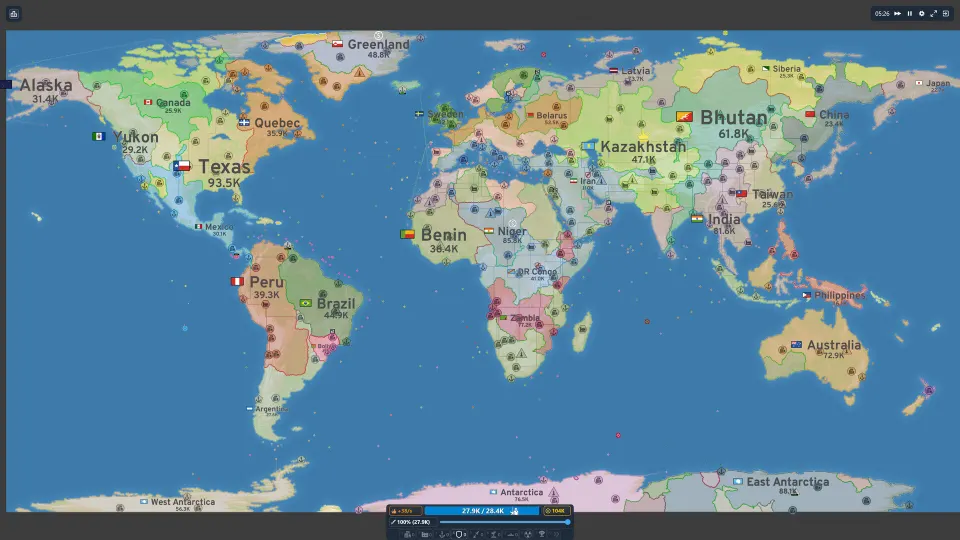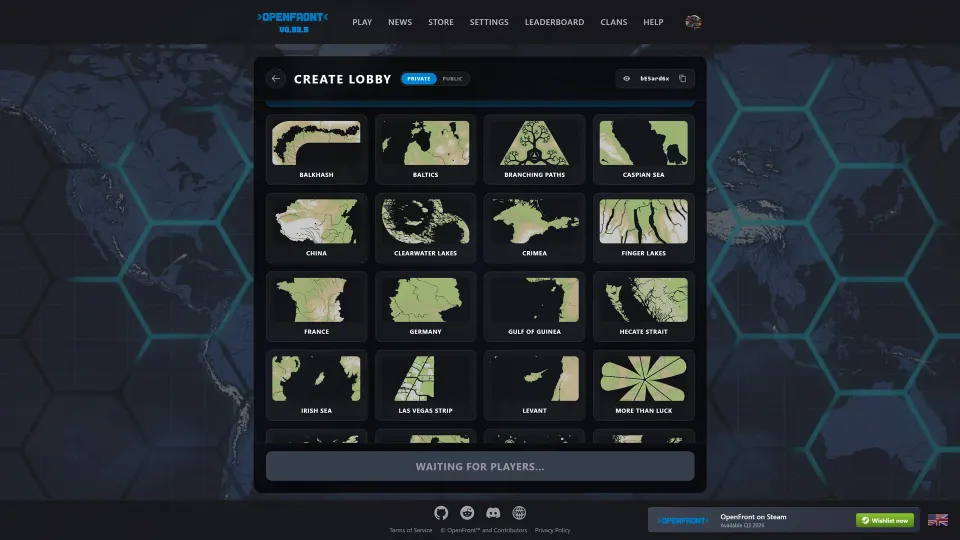
Start With Growth Before Aggression
OpenFront rewards players who understand population limits before committing to attacks. If you want to learn how to play effectively, your first priority is building enough capacity and preserving enough population to keep growing.
OpenFront is a game where owned tiles, city levels, population, attacks, and defensive decisions all matter. Expansion can improve your maximum population, but an attack also sends population away from your current position. That makes timing important: taking land may help your long-term capacity while weakening your short-term position.
This information was last updated for version v23.0 and may be out of date. Treat formulas and exact values as a useful framework, but confirm behavior in the current client when a decision is costly.
| Early priority | Why it matters |
|---|---|
| Control tiles | More owned tiles increase maximum population capacity. |
| Develop cities | Higher-level cities add population capacity. |
| Watch current population | Population growth slows as current population approaches maximum capacity. |
| Choose attacks carefully | Attacking affects the population available for defense and future growth. |
A simple way to think about the opening is this:
- Build a position that can sustain population.
- Avoid treating every nearby target as an immediate opportunity.
- Consider whether an attack improves your shape or merely creates another exposed edge.
- Keep enough population to respond if the situation changes.
Other decisions that can become important later include team spawning, economy space, defense posts, naval movement, island defense, trains, trade, piracy, enclosure, and overtime. You do not need to master every system at once. Start by learning the relationship between territory, population capacity, and attacks.
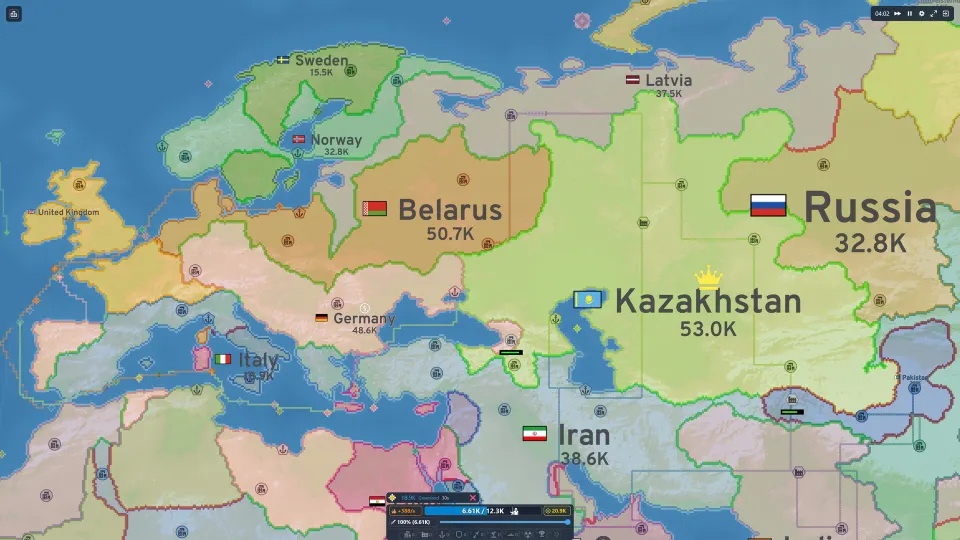
Understand Population Capacity
Maximum population is the upper limit of troops or resources a player can accumulate. Several factors influence it:
| Factor | Effect on maximum population |
|---|---|
| Number of owned tiles | More tiles raise capacity. |
| City levels | Higher city levels contribute additional capacity. |
| Game difficulty | Can modify capacity for certain player types. |
| Player type | Human players and bots use different scaling factors. |
| Infinite troops mode | The stated human-player formula does not apply in this mode. |
For human players outside infinite troops mode, maximum population has this structure:
| Formula component | Source value or relationship |
|---|---|
| Maximum population | 2 × basePop + cityBonus |
| Base population | Depends on owned tiles raised to 0.6, then multiplied by 1000, with 50000 added. |
| City bonus | Total city levels multiplied by city population increase. |
| City population increase | 25,000 per city level. |
The practical lesson is clearer than the math: land and cities both support a larger population ceiling. A player with limited land and few or no city levels has less capacity than a player who has expanded and developed cities.
That does not mean expansion is automatically correct. Attacking is a strategic subject that includes target selection, combat resolution, betrayal effects, defense posts, and attack speed. Capacity is valuable, but it must be converted into a position you can hold.
When deciding whether to pursue more territory, ask:
- Will the additional tiles improve your maximum population enough to justify the new border?
- Does this target leave you with a manageable shape?
- Are cities part of the opportunity, or are you only gaining exposed land?
- Will committing population here leave your existing territory vulnerable?
Judge expansion through liquidity, access, need, and deadline. Those are useful filters because they prevent expansion from becoming an automatic habit.
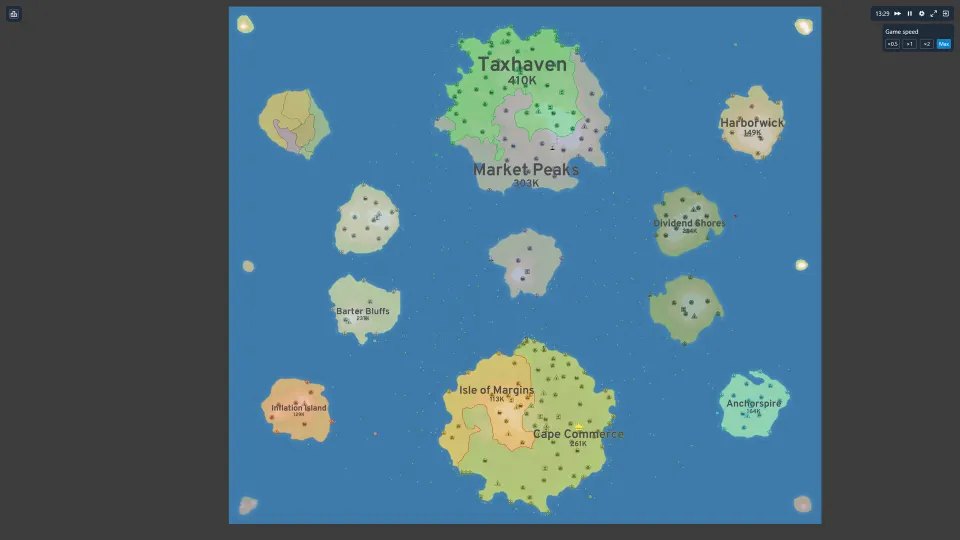
Time Attacks Around Population Growth
Population growth is not constant. Growth depends on current population relative to maximum population, with roughly 42% of maximum population as the point of maximum growth.
This creates a meaningful tradeoff. If you are extremely close to maximum population, your growth slows. If you attack aggressively and send too much population away, you may give up immediate strength. The useful range depends on the board, but neither staying completely full nor draining yourself is automatically optimal.
| Population state | Growth implication | Strategic consideration |
|---|---|---|
| Near maximum population | Growth is reduced as current population approaches the maximum. | Capacity from tiles and cities becomes especially valuable. |
| Roughly 42% of maximum population | This is the approximate maximum-growth point. | This is a useful reference point when weighing recovery and pressure. |
| Far below maximum population | No precise strategy is established for this state. | Avoid assuming that low population alone makes an attack safe. |
The per-tick growth formula includes a multiplier of 1 − currentPopulation / maxPopulation. In plain terms, the closer current population gets to its maximum, the smaller that part of growth becomes.
Use that relationship to make calmer decisions:
- If your population is high, consider whether you need more capacity through territory or city development.
- If you are preparing an attack, account for what remains after the commitment.
- If an attack fails, reassess rather than repeatedly sending population into the same problem.
- If you gain territory, remember that its long-term value may be capacity rather than an immediate combat advantage.
Do not turn the approximate 42% point into a rigid rule. It is an optimization for population growth, not a universal instruction to attack or defend at one exact percentage. Your borders, target selection, and ability to hold territory still determine whether an action is good.
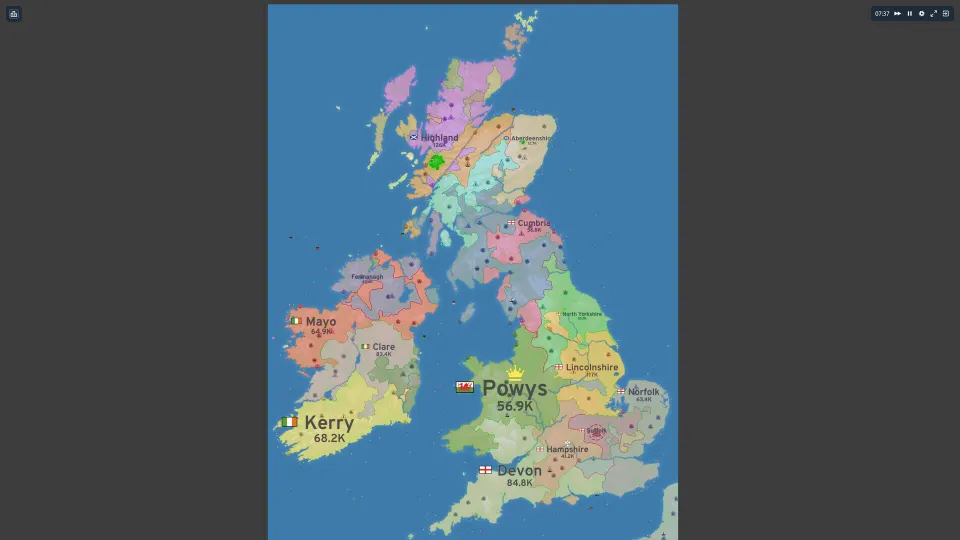
Choose Expansion and Defense Deliberately
Shape, access, and survivability are important considerations. Its threat-assessment guidance recommends choosing a target that improves your shape and stopping before a weak neighbor creates a dangerous new flank. Its annexation and enclosure guidance emphasizes small probes, verifying the inland-cluster rule, assigning capture credit, and keeping a second route after transfer.
Those ideas point to a disciplined approach: expand when the result is easier to defend or meaningfully improves your position, not simply because a target is available.
| Situation | Relevant decision |
|---|---|
| Safe economy considering more land | Test liquidity, access, need, and deadline before creating a second foothold. |
| Weak neighbor nearby | Choose targets that improve your shape and avoid creating a dangerous flank. |
| Closing a pocket | Use small probes, verify the inland-cluster rule, and keep a second route. |
| Defense Post decision | Consider its 30-tile defense zone and 50-tick build cost. |
| Island blockade threat | Screen transports, place a Port and Defense Post, and fall back to land when a sea route is disconnected. |
| Overtime approaching | Read the shrinking territory threshold and decide whether to defend the lead or attack it. |
Defense posts are one of the few systems with exact figures. A Defense Post has a 30-tile defense zone and a 50-tick build. Those values alone do not tell you where to place one, but they show why placement and timing matter.
Naval and team-focused choices also matter. For a landing across water, it recommends choosing a reachable coast, limiting each wave, using a Warship screen, building a beachhead, and canceling a failing operation before it empties the home front. For teams, it suggests preserving one neutral lane per player and choosing between a connected edge arc and a deliberate split.
These examples support a broader rule: avoid committing all of your strength to a plan that has no recovery path.
FAQ
What is the best first step for openfront how to play?
Start by understanding population capacity. Owned tiles and city levels increase maximum population, while current population affects growth. Build a position that can recover and defend before treating attacks as automatic.
How do tiles help in OpenFront?
Owning more tiles increases maximum population capacity. More capacity supports a larger population ceiling, though the value of expansion also depends on whether you can hold the resulting territory.
Why do cities matter?
Higher-level cities add population capacity. City population increase is 25,000 for each city level, included through the city-bonus part of the maximum-population calculation.
Should I always attack when my population is high?
No. Growth declines as current population approaches maximum population, but high population alone does not guarantee a safe attack. Consider target selection, your remaining defense, and whether the expansion improves your overall shape.
What does the 42% figure mean?
Roughly 42% of maximum population is the point of maximum population growth under the stated formula. It is a growth reference, not a command to attack at exactly that level.
When is a Defense Post worth considering?
A Defense Post has a 30-tile defense zone and a 50-tick build cost. Consider it when a stronger defensive line is more valuable than committing resources elsewhere.