What changed in the 0.28 update
OpenFront 0.28 makes repeated MIRV launches increasingly expensive for everyone in a match, while reducing allied train payouts. Your nuclear budget can become outdated when another player fires, and the same rail connections now produce less gold.
The OpenFront changelog lists v28 as released on December 18, 2025. Also identified as v0.28.0, this update combines economic changes with combat previews, revised nation behavior, six maps, and Christmas presentation. This page covers that release and its follow-up patches through v0.28.3.
For returning players, these are the changes to check first:
- Nuclear spending: MIRVs start at 25 million gold, with a shared price increase after every launch.
- Rail earnings: The train payout from allies falls from 50,000 to 35,000 gold.
- Attack planning: Nuclear targeting and missile silo placement gain SAM coverage previews.
- Nation diplomacy: AI alliance decisions account for threats and troop strength.
- Match readability: Troop caps, team assignments, and attack alerts become easier to inspect.
These features belong to the 0.28 release series. Later additions, such as ranked 1v1 in v29, fall outside this update.
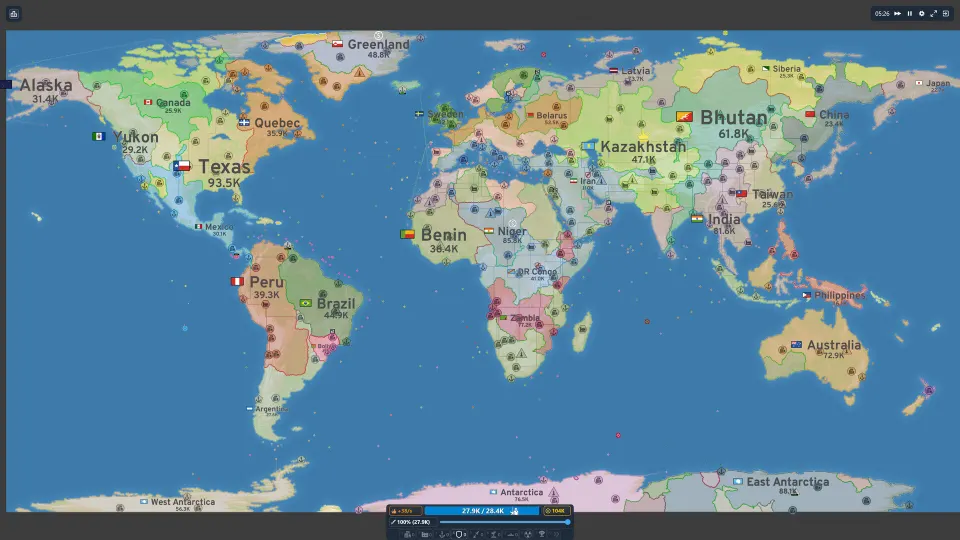
MIRV costs and train income
Previously, a MIRV had a fixed price of 25 million gold. Version 0.28 keeps that starting price but adds 15 million for every MIRV already launched by any player in the match.
| MIRVs already launched in the match | Cost of the next MIRV |
|---|---|
| 0 | 25 million gold |
| 1 | 40 million gold |
| 2 | 55 million gold |
| 3 | 70 million gold |
| 4 | 85 million gold |
The launch count is shared across the match. If an opponent fires the first MIRV, your first launch costs 40 million. If another player then fires, the next price becomes 55 million, regardless of whether you have launched anything yourself.
Each launch adds the same amount. The change was intended to discourage prolonged exchanges in which both sides repeatedly buy MIRVs and remain locked in mutually assured destruction. It makes the timing and purpose of each launch more consequential.
A lower price creates an incentive to act earlier, but it does not make every early shot worthwhile. Spending 25 million on an ineffective strike still consumes resources. Waiting may give you a more valuable target, while exposing your plan to price increases caused by other players.
Train income receives a separate reduction: the payout from allies drops from 50,000 to 35,000 gold. That is a 30% cut to this particular payout. The change should be applied specifically to allied train earnings when comparing an existing rail network with its previous returns.
When adjusting your economy:
- Recheck the MIRV price before committing to a purchase.
- Judge a nuclear target by its likely value and visible defenses.
- Budget allied train income using the new 35,000 payout.
- Reconsider spending plans that depended on repeatedly buying MIRVs at a fixed price.
Combat tools and nation behavior
The new Retaliate button appears on attack events and provides a quick way to counterattack. It reduces the interface work needed to respond when fighting breaks out. You should still assess troop strength and the surrounding fronts before using the shortcut.
Nuclear targeting now displays SAM interception information along the trajectory. Color-coded ranges show relevant defensive coverage, helping you evaluate a shot before launching it. Missile silo placement also displays SAM coverage, giving you useful defensive information while choosing where to build.
These previews support two separate decisions: where to place a launcher and whether a particular shot crosses defended space. Check both when preparing a nuclear attack. A placement decision made without consulting the coverage display can limit the usefulness of the silo you are about to purchase.
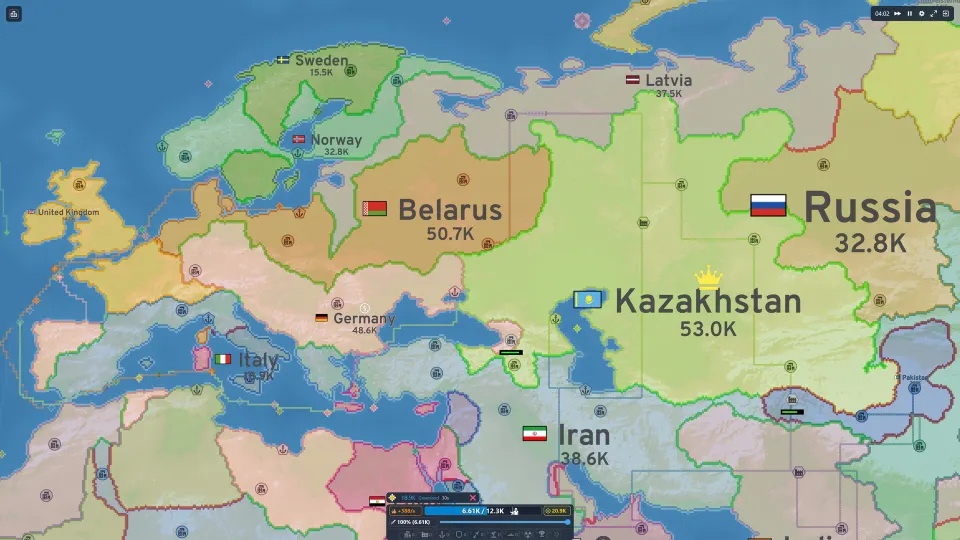
Player information overlays and the leaderboard now show maximum troops. This is the player's troop cap, which adds context when comparing opponents and planning attacks. Attack alerts also become easier to distinguish: land attacks use orange borders, while betrayals use red.
Nation balancing puts more emphasis on AI behavior across difficulty settings. Enemy selection becomes more responsive, and nations on Impossible difficulty can conduct parallel attacks. Returning players may therefore encounter different pressure even when they recognize the map and neighboring nations.
Alliance decisions now consider threat assessment and troop strength. Minimum donation requirements are randomized according to difficulty to address exploits. A diplomatic approach that worked reliably before the update may need reassessment, especially when your military position is weak or several nations are choosing enemies.
Team previews show assignments before play, including clan grouping, and lobby information displays team composition. The game timer also adopts an hours, minutes, and seconds format alongside the controls.
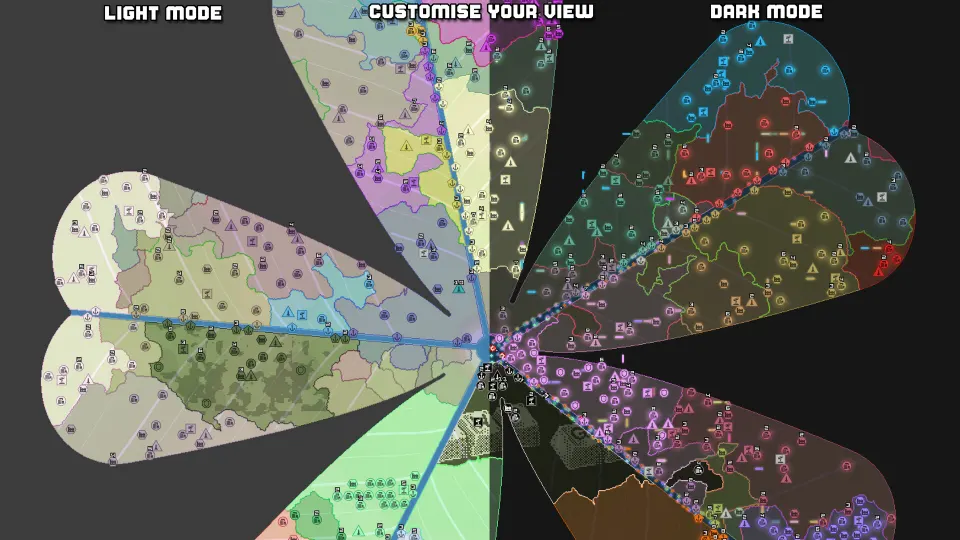
New maps and holiday additions
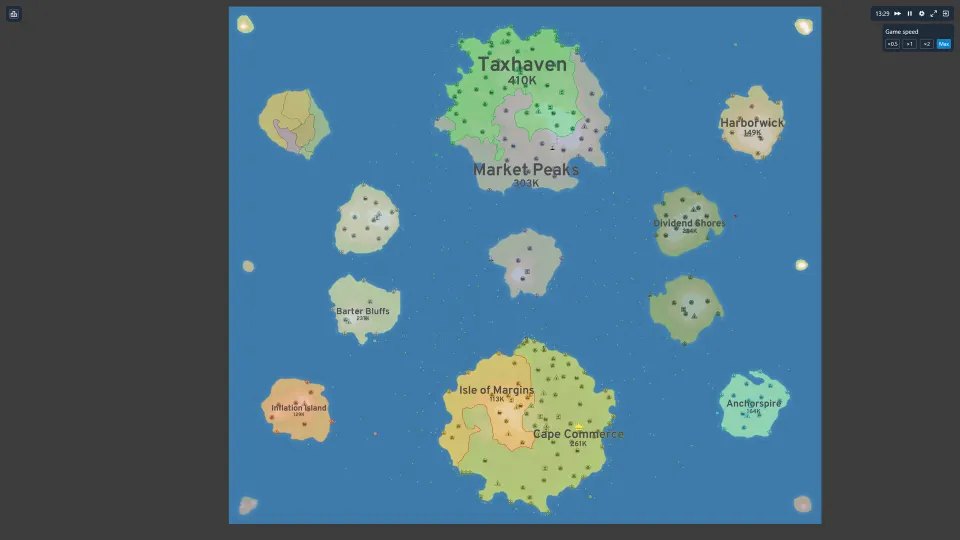
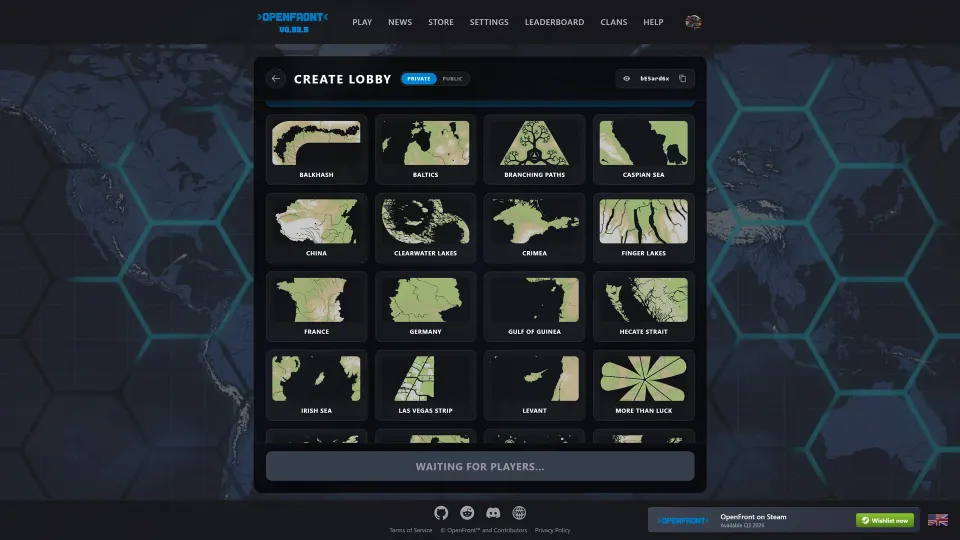
Version 0.28 adds six maps, ranging from a balanced island layout to historical and geographic settings. Their distinguishing features are:
| Map | Setting or layout |
|---|---|
| Four Islands | A small square map with evenly balanced islands |
| Svalmel | A Christmas-themed map containing five nations |
| New York City | A historical setting with British and Dutch colonies and Indigenous peoples |
| Lisbon | Lisbon and its surrounding area |
| Gulf of St. Lawrence | Maritime Canada, accompanied by new provincial flags |
| Manicouagan | A map based on the Quebec reservoir |
Four Islands provides a deliberately balanced layout. New York City emphasizes a historical setup, while Svalmel connects directly to the seasonal presentation. The geographic additions broaden the available settings without being described as new game modes.
The homepage receives falling snow, festive colors, and a Santa hat on announcements. In matches, Santa can appear randomly, nuclear explosions use gift and shooting-star effects, and fallout receives melting-snowman and elf animations. Christmas-themed nuclear colors are also adjusted for clarity.
The update adds holiday emojis alongside factory and train emojis. These visual additions accompanied the release; the economic and combat changes remain the more relevant details when studying how matches in this version played.
Fixes and the 0.28 patch sequence
Several fixes address problems that could directly affect spending, starting strength, and lobby reliability. The v0.28.0 release announcement describes these alongside the gameplay additions.
| Area | Fix introduced in v0.28.0 |
|---|---|
| Construction spending | Removed a temporary construction unit type responsible for double gold deductions |
| Nation starting strength | Corrected undefined strength values that affected starting troops |
| Clan team assignment | Fixed desynchronization when username filtering removed clan tags |
| Full lobbies | Prevented players from joining games that were already full |
| Upgraded structures | Fixed building icons shrinking after upgrades |
| Event panel | Corrected scrolling so the panel could remain at the bottom |
Other fixes restore the territory skin option and Firefox back-button behavior. Username validation and error handling become more consistent, and keyboard shortcuts receive a fix for failures while typing in quick chat.
The subsequent patches are worth separating from the original release because they change how parts of the 0.28 series behave. The v0.28.3 release record includes the following progression:
| Version | Recorded changes |
|---|---|
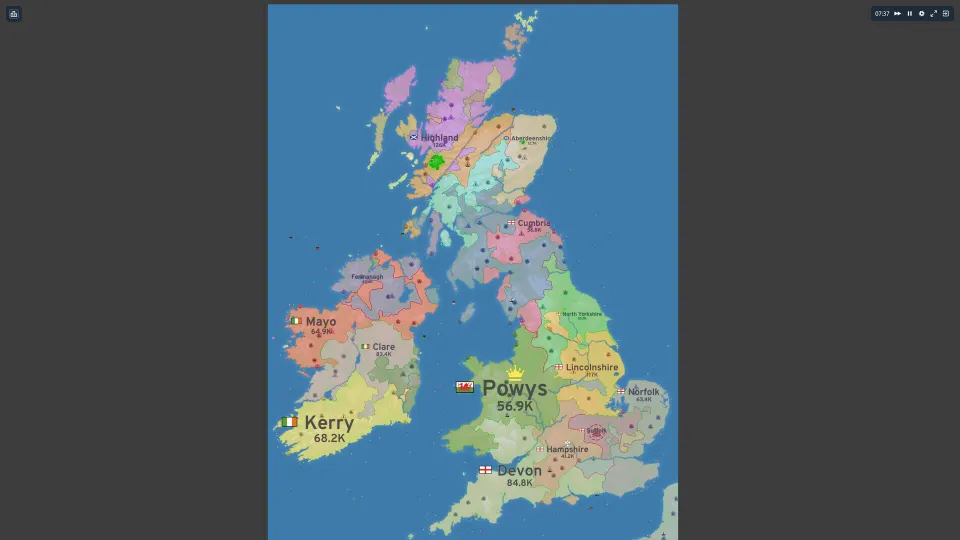
| v0.28.1 | Crazy Games integration, public difficulty changed to Easy, SAM launcher randomness removed, and Britannia and Pangaea map fixes |
| v0.28.2 | Fixed a bug that prevented bots from attacking human players |
| v0.28.3 | New Year's update |
For comparisons, identify the specific patch before drawing conclusions. Public difficulty changed in v0.28.1, and the bot attack fix arrived in v0.28.2. Both details matter when comparing experiences from different points in the release series.
The base update also includes performance work on cluster calculations, railroad lookups, and color scans. These changes support the game internally, while the previews, economy adjustments, and bug fixes provide the clearest player-facing differences.
FAQ
What does openfront 0.28 refer to?
It refers to OpenFront's v28 release, also numbered v0.28.0, and sometimes its follow-up patch series. The main update introduced escalating MIRV prices, lower allied train payouts, revised nations, combat previews, six maps, and seasonal effects.
Does the MIRV price increase only when I fire?
No. Every player's MIRV launches contribute to the same price increase. The starting cost is 25 million gold, followed by an additional 15 million for each earlier launch in the match. Another player's shot can therefore change what you can afford.
Should I launch immediately to secure the lowest price?
The first launch has the lowest price, but timing should also depend on the target and its defenses. Use the SAM preview to assess the shot. An affordable launch can still be a poor investment if it achieves little.
Did 0.28 change SAM interception?
The original release added interception previews during nuclear targeting and coverage previews during missile silo placement. The follow-up v0.28.1 patch removed randomness from SAM launchers. Distinguish those changes when comparing the initial release with later 0.28 matches.
Which patch fixed bots ignoring human players?
Version v0.28.2 fixed the bug that prevented bots from attacking humans. This was separate from the base update's nation AI changes, which revised enemy selection, alliance decisions, donation requirements, and behavior across difficulty settings.