What makes ranked worth playing?
OpenFront ranked is where individual decisions matter more because opponents are matched around skill rating rather than thrown together in a public lobby. It offers a clearer way to measure improvement, but it also makes preparation, map awareness, and early-game execution much more important.
Ranked has two distinct competitive queues: solo 1v1 and cooperative 2v2. They are not alternate formats on one shared rating; each has its own rating, peak rating, matchmaking pool, and leaderboard presence.
| Queue | Players | Rating ladder | Key difference |
|---|---|---|---|
| Ranked 1v1 | 2 humans | Separate solo rating | A direct duel surrounded by bots |
| Ranked 2v2 | 4 humans | Separate team rating | Partners can coordinate and donate resources |
| Public games | Varies | No ranked ladder | Wider mix of player skill and match conditions |
A strong 1v1 player does not automatically carry a rating into 2v2. If you have never played one of the queues, expect that mode to treat you as unranked until you establish results there.
That separation is useful. Solo games test your own expansion, economy, timing, and ability to react under pressure. Team games test those skills too, but add communication, lane assignment, resource transfers, and the ability to trust another player with part of the map.
Ranked also has a practical cost: accounts without the unlimited ranked perk have a limited daily supply of free ranked entries. Treat each game as a deliberate attempt rather than a warm-up you can endlessly repeat. If you want to practice a new opening or unfamiliar map, public games are often the safer place to experiment first.
How matchmaking and match starts work
To enter OpenFront ranked, choose either 1v1 or 2v2 from the Ranked menu. The game searches for players near your rating and creates a match when it can fill the required slots. A 2v2 match may favor clanmates as partners when possible, but a premade teammate is the most dependable way to control who plays beside you.
Once a match is ready, every player has a short selection period. You have 15 seconds to make the required pick; failing to do so cancels the match. That makes a reliable connection and quick attention more important than in a casual lobby.
Use this pre-queue checklist:
- Confirm whether you are entering the correct ladder: 1v1 and 2v2 ratings do not transfer.
- Be ready to select immediately when the match appears.
- Avoid queueing if you may need to leave your screen.
- If playing 2v2, settle your partner and basic plan before joining the queue.
- Save unfamiliar openings for non-ranked matches when daily entries are limited.
| Ranked start rule | What it means for players |
|---|---|
| Rating-based matchmaking | Opponents are generally selected from a nearby rating range |
| 15-second pick deadline | Slow selections can cancel the game |
| Separate leaderboards | Solo and team results are displayed independently |
| Limited free entries | Daily ranked attempts should be used intentionally |
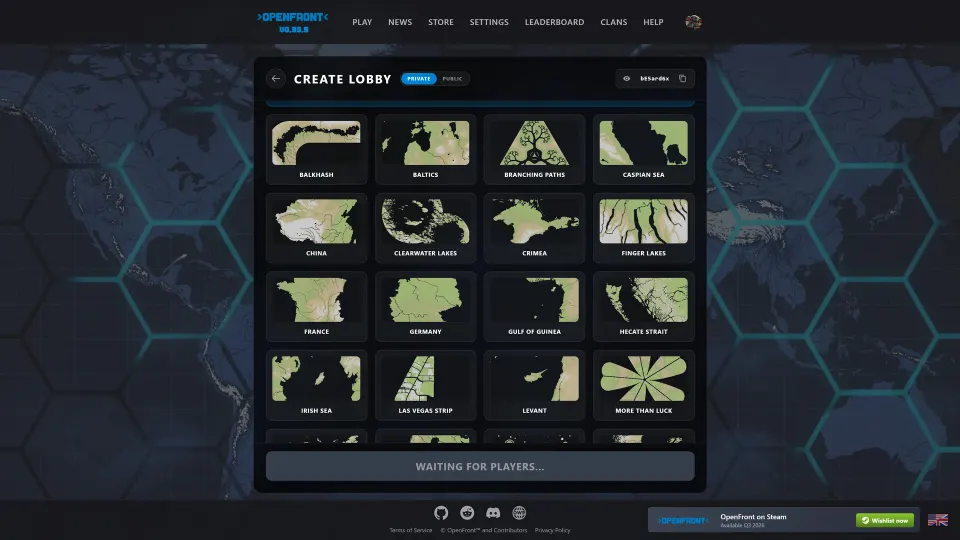
| Randomized map selection | You must prepare for more than one map |
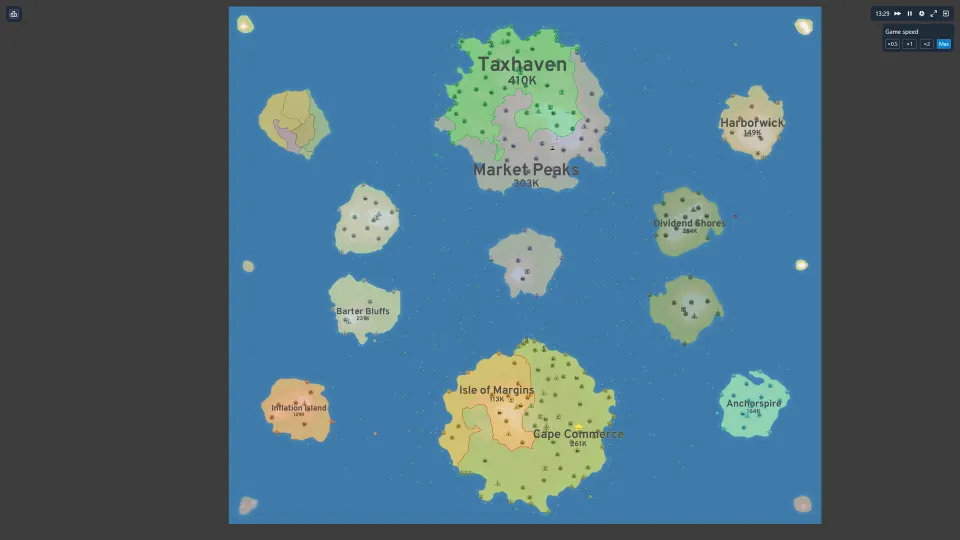
Maps come from a weighted pool rather than a player-selected map list. Australia is especially common, appearing at roughly a 40% rate in both ranked formats. Learn its expansion routes, water access, and likely early contact points before assuming every ranked game will play like a continent map.
Ranked games also provide a short period of spawn immunity after player selection. In 1v1, the window is 30 seconds; in 2v2, it is 60 seconds. Use that time to establish your first expansion path, identify nearby bots, and decide where you will secure territory instead of waiting passively for danger to arrive.
Playing the 1v1 and 2v2 formats
The two queues share ranked pressure but reward different habits. In 1v1, the opponent is the only human rival, so efficient annexations, city timing, economy, and well-chosen attacks determine whether you gain a lead. Bots remain important because they offer territory, conquest gold, and opportunities to improve your position before committing to a fight.
Do not confuse fast expansion with careless expansion. Grabbing territory is valuable, but overextending troops or delaying your economy can leave you exposed when your opponent pushes across water or finds an open border.
| Format detail | Ranked 1v1 | Ranked 2v2 |
|---|---|---|
| Spawn-immunity window | 30 seconds | 60 seconds |
| Nations | Available | Disabled |
| Team donations | Not available | Gold and Troops can be donated |
| Compact-map chance | Map pool varies | 50% |
| End condition | Defeat the opposing player | Eliminate the opposing team |
In 2v2, Nations are disabled. Both teams begin from the same basic setup, so a nation-specific bonus cannot rescue an uncoordinated opening. This makes clean fundamentals and partner coordination even more valuable.
Before the match begins, decide who will cover each direction. One player can prioritize nearby bots and economic growth while the other watches for enemy pressure, but neither player should become so specialized that they cannot survive alone for a short time.
A useful 2v2 plan usually follows this sequence:
- Split nearby territory so both teammates can grow without fighting each other for the same pocket.
- Call out early enemy contact and identify which opposing player is more exposed.
- Keep enough troops to defend your own lane before sending a major attack.
- Donate Gold or Troops when a teammate can turn them into a decisive defense or breakthrough.
- Shift both players toward one enemy only when the remaining opponent cannot punish your open territory.
Compact 2v2 maps create shorter travel distances and faster battles. They use 100 background bots and a 10-minute timer. Standard-sized 2v2 maps have 400 bots and a 15-minute timer, giving more room for expansion, economy building, and delayed attacks.
| 2v2 map type | Background bots | Match timer | Typical priority |
|---|---|---|---|
| Compact | 100 | 10 minutes | Secure space and react quickly |
| Standard | 400 | 15 minutes | Grow efficiently before committing |
| Australia compact map | Part of compact pool | 10 minutes | Prepare for frequent close contact |
| Iceland, Asia, EuropeClassic | Part of compact pool | 10 minutes | Learn tight borders and short routes |
Donation is powerful because it lets a team convert one player’s surplus into a shared advantage. However, avoid donating automatically. A teammate holding a critical front may need help immediately, while a teammate who is safely expanding may gain more from keeping their own economy intact. The best transfers have a visible purpose: hold a city, stop a breakthrough, finish a conquest, or enable a coordinated attack.
FAQ
What is OpenFront ranked?
OpenFront ranked is the game’s competitive matchmaking mode. It places players into separate 1v1 and 2v2 ladders, tracks rating changes from wins and losses, and displays results on queue-specific leaderboards.
Do 1v1 and 2v2 use the same rating?
No. Each mode has an independent rating and peak rating. Playing well in solo queue does not create a 2v2 rank, and team-game results do not change your 1v1 rating.
Can I choose the ranked map?
No. Ranked maps are selected from a weighted pool. Australia appears frequently, so it is one of the most useful maps to practice.
Why did my ranked match cancel before starting?
The usual reason is that a player missed the 15-second selection deadline. Stay ready after queueing because a missed pick can end the match before gameplay begins.
Can teammates share resources in 2v2?
Yes. Ranked 2v2 allows teammates to donate both Gold and Troops. This feature is unavailable in ranked 1v1 and is central to coordinated team defense and attacks.