Which map should you choose?
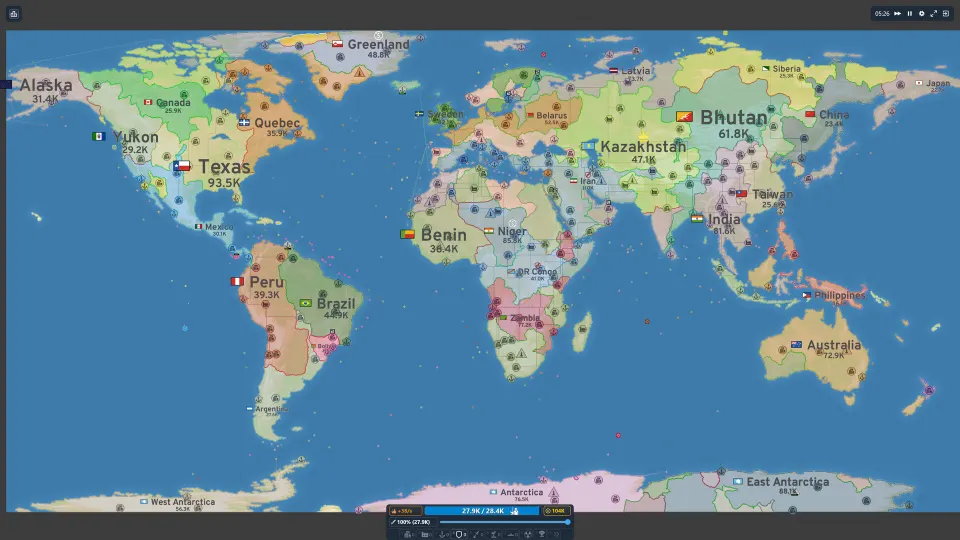
World is the strongest starting recommendation for players who want land expansion, naval movement, and trade in the same match. Map choice matters because coastlines, terrain, and distance between opponents change how much time you have to build before fighting. For a more specific preference, consider Europe for land-and-port play or Faroe Islands for a naval focus.
These are recommendations by playstyle, not an official ranking. A map that rewards your favorite opening may feel much harder when the lobby is crowded or another player takes your preferred starting area.
| Your priority | Map to consider | Why it fits |
|---|---|---|
| A varied overall experience | World | Continents, islands, canals, and varied terrain create several expansion options. |
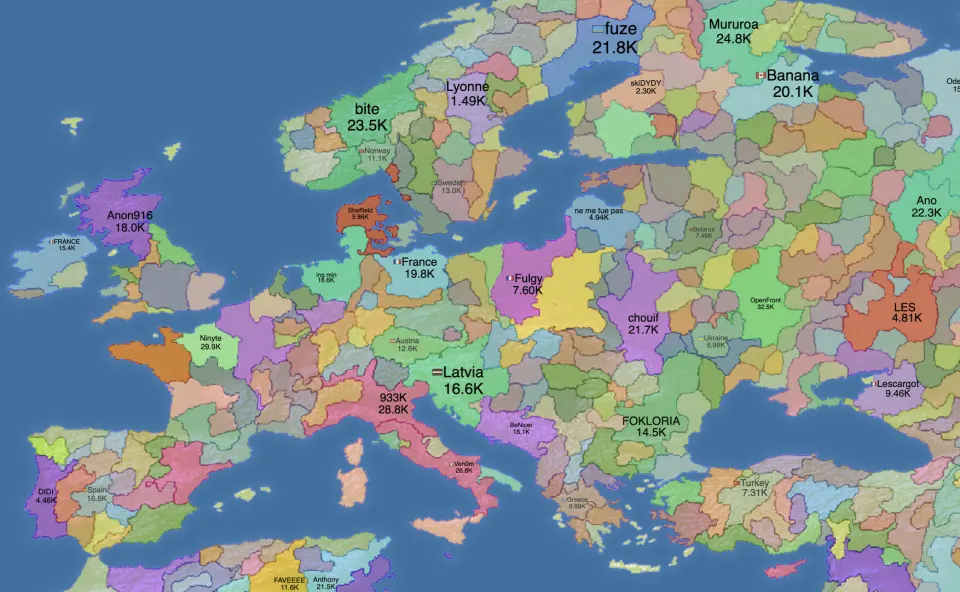
| Land expansion with useful ports | Europe | Central and eastern plains combine with access to seas and rivers. |
| Naval play | Faroe Islands | A community FFA ranking highlights success with boats and extensive port development. |
| A large geographic setting | Giant World Map | Its expanded world layout makes travel distances an important consideration. |
| Comparing openings | Tournament 1–4 | The map database identifies these layouts as designed for competitive balance. |
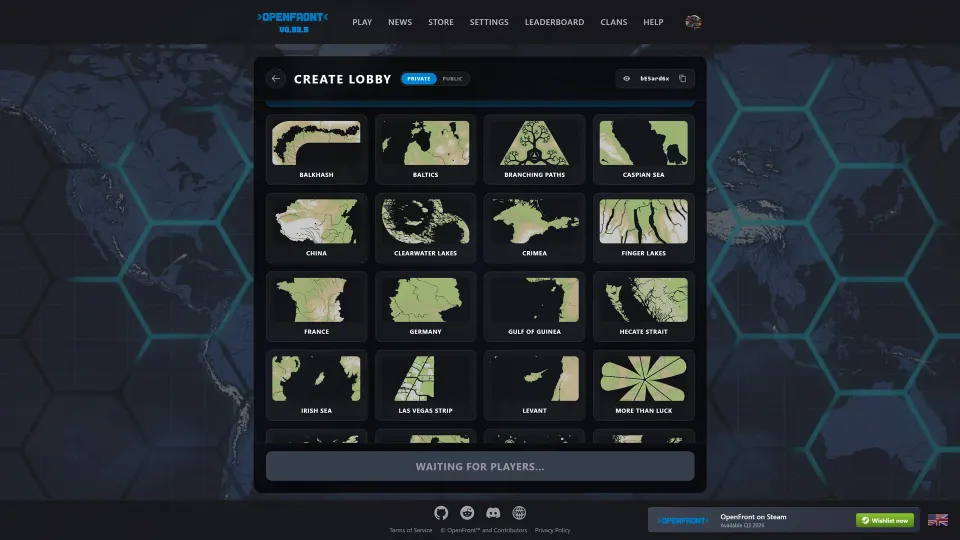
Always inspect the lobby preview before committing. The same map can present a very different opening depending on player count and where opponents gather.
Best maps for ports and naval play
Water access is valuable when it connects your territory to useful routes. Check rivers, canals, and straits before spawning: a connected sea offers different opportunities from an isolated body of water.
The OpenFront community wiki describes World, Giant World Map, South America, and Oceania as maps with substantial opportunities for trade or naval activity.
| Map | Relevant water features | Practical consideration |
|---|---|---|
| World | Extensive oceans, islands, and both Panama and Suez canals | Check routes between seas before planning distant expansion. |
| Giant World Map | Extensive oceans and Panama Canal; no Suez Canal in the wiki description | Do not assume every route from World exists here. |
| South America | Panama Canal, rivers, and Caribbean islands | Consider coastal and river access alongside your land position. |
| Oceania | Predominantly water, with scattered islands | Inspect how much connected land your starting location offers. |
World is the most versatile recommendation in this group. Its geography lets you combine a substantial land base with overseas expansion.
Giant World Map appeals when you enjoy planning across greater distances. An 85-player gameplay video illustrates the downside: the player repeatedly waits for boats to reach distant targets. Treat travel time as part of your plan.
Faroe Islands and Deglaciated Antarctica also deserve consideration for port-focused FFA play. Their strongest endorsement here comes from one experienced player's personal ranking, rather than a statistical comparison.
Best maps for land expansion and practice
For land-focused play, look beyond the amount of land visible on the preview. Terrain affects expansion, and a central position can expose you to several opponents at once. Coastal access may still be useful even when your main goal is building a large connected territory.
| Map or group | Relevant characteristics | Best reason to consider it |
|---|---|---|
| Europe | Broad plains in central and eastern areas; mountainous regions elsewhere | Practice combining land expansion with ports. |
| Africa | Extensive hills and mountains, plus long rivers | Work on expansion decisions where terrain slows progress. |
| Asia | Large landmass with mountains in central regions and long coastlines | Compare inland routes with coastal opportunities. |
| Pangaea | Described by one FFA player as especially crowded and combat-heavy | Try close-contact play if that pressure appeals to you. |
| Tournament 1–4 | Listed as competition layouts designed for balance | Compare openings with less geographic spawn variation. |
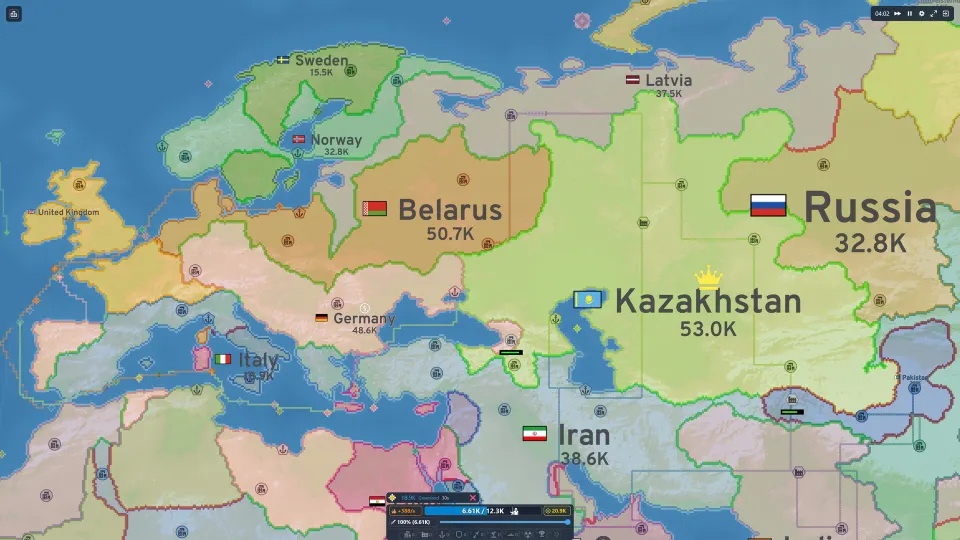
Europe is a useful starting point if you want both land and naval decisions without choosing a predominantly oceanic map. Its flatter areas offer a different opening from the Alps or Scandinavia, so the specific spawn still matters.
Africa requires more attention to terrain. The community wiki describes its hills and mountains as slowing expansion, while rivers can support trade farther inland. A location that looks safely distant from opponents may also take longer to develop.
The OpenFront map database recommends tournament layouts for repeatable strategy comparisons. Keep lobby size similar when practicing: changing both the map and the number of opponents makes it harder to understand why an opening worked.
How much should you trust community rankings?
Community rankings help identify maps worth trying, but they often measure personal comfort as much as map quality. A player who favors boats and knows a reliable coastal spawn may rank island maps above layouts that favor their competitors.
One Reddit FFA ranking explicitly evaluates the author's own success and difficulty. The author reports substantial experience but provides no statistical win-rate record.
| Map | Placement in that personal ranking | Reason given |
|---|---|---|
| Deglaciated Antarctica | Tier 1, first choice | Particularly successful with extensive port development. |
| Baikal | Tier 1 | A familiar starting position supports strong expansion. |
| Faroe Islands | Tier 1 | Boats and a trusted spawn suit the author's approach. |
| Africa | Tier 2 | Less crowded starts, especially in the south, work well. |
| World | Tier 3 | Large player counts make winning feel harder. |
World can offer varied gameplay while being difficult to win in a busy FFA lobby. A specialist may prefer Deglaciated Antarctica because it supports an opening they have practiced extensively.
The TierMaker community ranking averages only four submitted lists and displays a November 23, 2025 update date. That is a small sample, so it should not be treated as broad community agreement.
Use rankings to build a shortlist. Then compare your own results across several matches, paying attention to spawn crowding, early contact, and whether you actually gained access to the routes you wanted.
Choose a spawn that fits the map
A recommended map cannot compensate for a poor starting position. Before spawning, inspect nearby land, connected water, and the positions other players have selected. The community spawn tips emphasize accessible trade routes, connected territory, and terrain that supports efficient expansion.
Use this checklist:
- Check room to expand. Look for connected territory you can reach before becoming boxed in. A small island may offer separation, but it also limits immediate land expansion.
- Trace the water connection. Favor a shoreline or river connected to the ocean when trade is part of your plan. Follow the route visually instead of assuming nearby water connects.
- Count likely early opponents. A central location can leave you exposed on several sides. Compare the available land with the number of players competing for it.
- Read the terrain. Low-resistance terrain, such as grass, supports efficient expansion. Mountains and difficult corridors can change how quickly neighboring territories meet.
- Inspect nearby bots and nations. They can provide expansion and economic opportunities. Judge how accessible they are rather than choosing a spawn solely because many are nearby.
- Match your position to the mode. In team games, proximity to allies can support coordinated play. An isolated FFA opening should not automatically become your preferred team-game spawn.
After each match, identify whether limited land, slow boat journeys, or pressure from several neighbors disrupted your plan. Adjust your spawn on the same map to make comparisons easier.
FAQ
What is the best openfront map for beginners?
World is a useful all-around starting choice because it includes land expansion, islands, trade routes, and naval movement. Europe is another option if you prefer substantial connected land with port opportunities. On either map, prioritize an uncrowded spawn with room to expand.
Which map should I choose for a port-heavy strategy?
Consider World or Oceania for their water geography, and try Faroe Islands or Deglaciated Antarctica if you want to explore community-favored naval openings. Port access alone is insufficient: you also need room to develop and a position you can defend.
Is Giant World Map simply a better World?
No. Its appeal depends on whether you enjoy the larger setting and longer travel distances. The community wiki also identifies a route difference: World includes the Suez Canal, while Giant World Map does not. Inspect connections before copying a familiar plan.
Are tournament maps the fairest choice?
Tournament 1–4 are the clearest recommendation for practicing on layouts designed around competitive balance. They are useful for comparing openings, but lobby size and player decisions still affect the match. Use similar settings when evaluating whether a strategy has improved.
Can I use the same map ranking for FFA and team games?
Treat them separately. The detailed Reddit ranking discussed above specifically evaluates FFA performance. Team games introduce different positioning priorities, including staying close enough to allies for support. A strong isolated start in FFA may be less useful when teammates need help nearby.