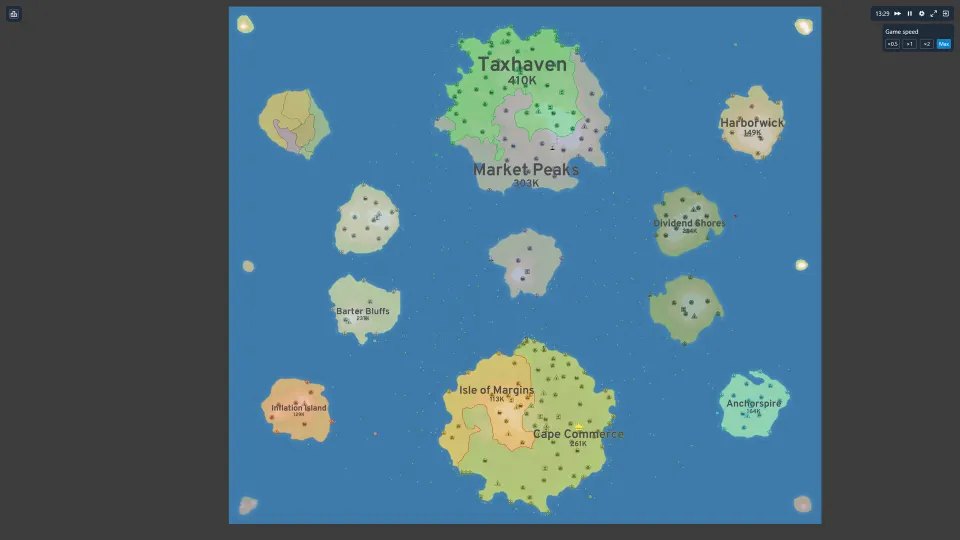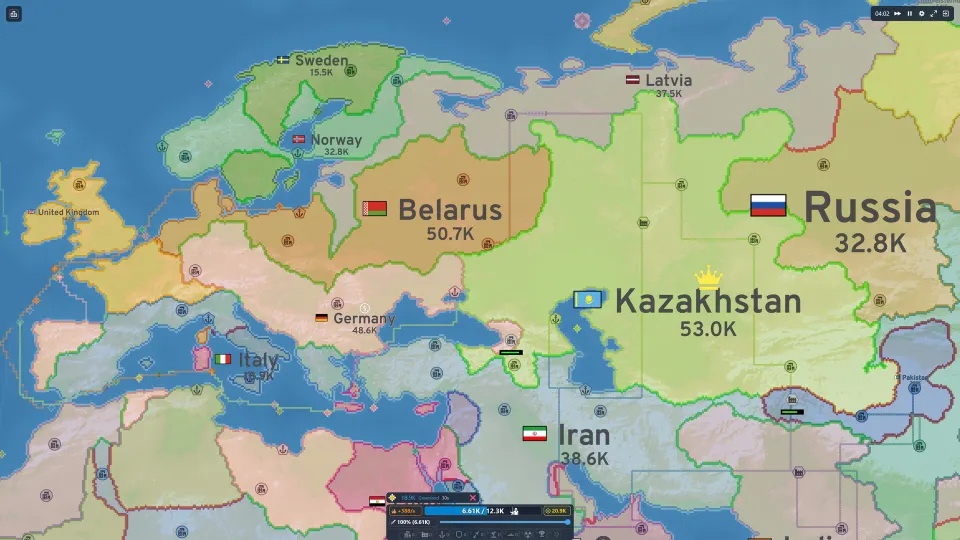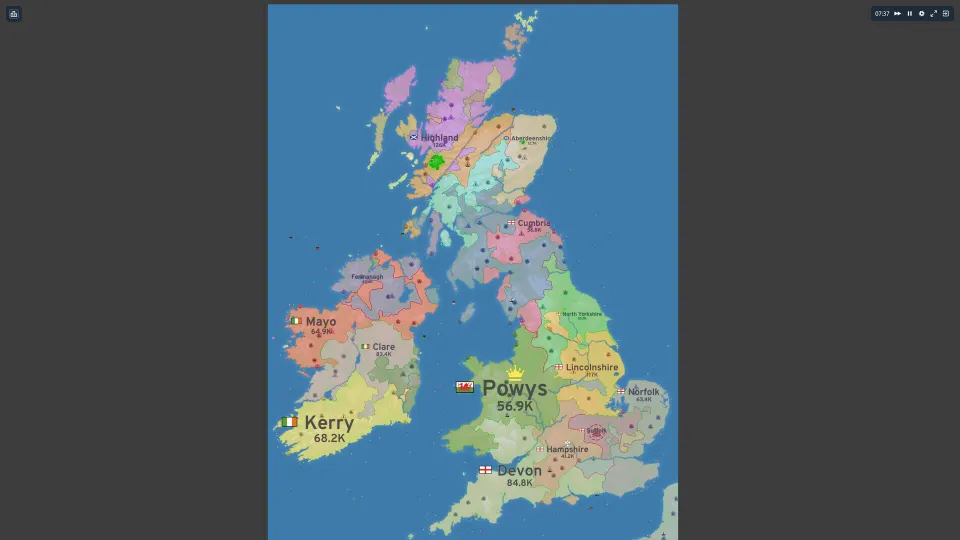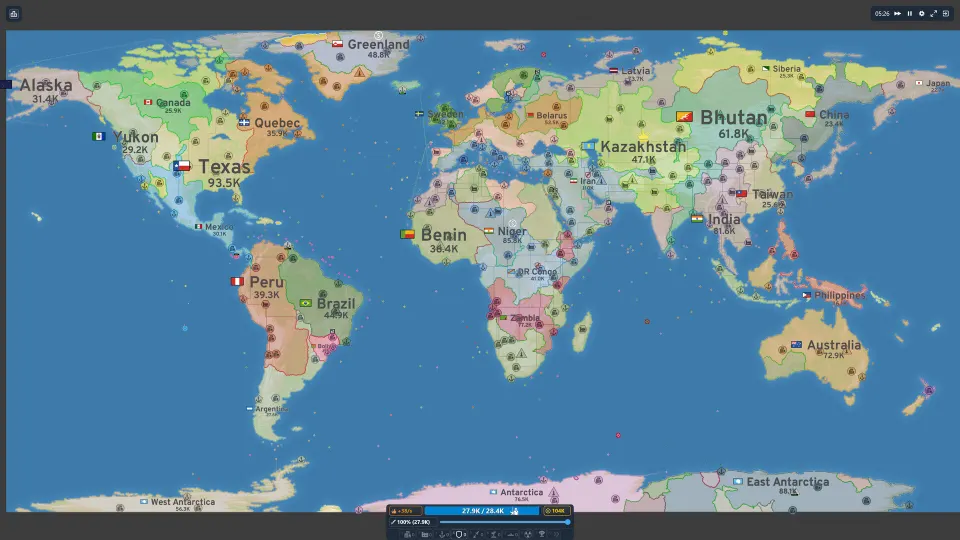
Start With Decisions That Keep You Alive
OpenFront becomes much easier when you treat the opening as a series of small decisions instead of a rush to take everything. This guide helps you find the relevant information quickly, protect your early position, and recognize when a situation calls for growth, defense, or a change of plan.
OpenFront is described by its community wiki as an open-source, browser-based RTS. Its current wiki navigation groups information around settings, combat, gold, bots, nations, buildings, ports, atom bombs, warships, transport ships, trains, and the game itself.
The first goal is not to master every system at once. Choose the immediate problem in front of you:
- Starting your first match and avoiding an empty army.
- Learning a control, hotkey, or mouse action.
- Growing gold and population without stalling.
- Choosing an expansion route that does not create an exposed flank.
- Understanding whether water, rail, defense, or diplomacy changes the next move.
| Situation | Recommended information path | Why it matters |
|---|---|---|
| First game | First-match walkthrough | Covers spawn choice, controlled expansion, interface reading, and recovery from beginner mistakes. |
| Need a control | Shortcuts reference or hotkeys guide | Helps when you already know the action you want to perform. |
| Economy decision | Economy growth guide | Connects base income, Cities, trade ships, trains, and troop reserves to spending choices. |
| Current changes | v34 impact or release guide | OpenFront materials identify version-sensitive rules and recent updates. |
A useful early habit is to separate facts from assumptions. The OpenFront.fyi guides say they use reproducible paths through the public game interface and keep observed behavior separate from editorial explanation. That is especially valuable when a remembered strategy may belong to an older version.
Build a Reliable Opening Plan
Your opening should create options, not force a single attack. The available guidance consistently points toward controlled expansion, reading the board, and maintaining a route to recover when an initial choice stops working.
Begin by choosing a spawn and expanding in controlled steps. The first-match material specifically frames early survival around avoiding an empty army, reading the interface, and recovering from common mistakes. That makes it a better starting point than copying a fixed build order from an old video or guide.
When deciding whether to take more land, use four questions identified by the tall-versus-wide guide:
- Do you have enough liquidity for the change?
- Can you access the new area safely?
- Do you need the land now?
- Is there a deadline that makes waiting dangerous?
This avoids a common strategic error: expanding simply because open territory exists. A compact core can be more useful than a second foothold if the new position cannot be supported.
| Opening question | Source-backed consideration | Practical takeaway |
|---|---|---|
| Should I expand? | Liquidity, access, need, and deadline | Take land when it improves the position rather than only the territory count. |
| Should teammates spawn together? | Teammate rings, neutral lanes, connected edge arcs, or deliberate splits | Preserve space so teammates do not immediately block one another. |
| Is a pocket safe to close? | Small probes, inland-cluster verification, capture credit, and a second route | Confirm the transfer will not leave you without an alternative path. |
| Who should I pressure? | Whole-board scan, shape improvement, and flank risk | Stop if pressuring a weak neighbor creates a dangerous new flank. |
For team games, space is an economic resource as well as a military one. The team economy guidance recommends reserving corridors for Cities, Factories, Ports, and rail. Before committing to shared infrastructure, identify who pays for it and confirm that the first settlement works. If a shared route no longer survives, stop investing in it.
A disciplined opening also means leaving room to retreat. On maps or positions involving water, a failing landing should be canceled before it drains the home front. On land, keep a second expansion route when the first one closes. These are not passive choices; they preserve the ability to respond when another player changes the board.
Choose the System That Solves the Board State
OpenFront includes multiple systems that matter at different moments. You do not need every system in every match. The best choice is the one that resolves the current constraint.
Cities, trade ships, trains, and troop reserves are all named as parts of economy growth. Ports, warships, and transport ships become more relevant when open water separates your position from a useful coast. Defense Posts matter when a vulnerable area needs a durable zone of protection.
| System | Source-supported use | Key caution |
|---|---|---|
| Cities | Part of economy and population planning | Do not treat every available purchase as an automatic priority. |
| Trade ships | Part of economy growth and trade routes | Compare route distance, capture risk, and diplomacy before committing. |
| Trains | Stations, rail segments, stops, payouts, and hub layouts | Stop upgrading when the network no longer pays. |
| Transport ships | Landing across open water | Use reachable coasts, capped waves, and a beachhead. |
| Warships | Screen transport operations and naval decisions | Watch veterancy, repair capacity, and retreat thresholds. |
| Defense Posts | Create a 30-tile defense zone | Budget the stated 50-tick build and consider whether a second line is better. |
Water operations need special care because they can weaken the position that launched them. The transport landing guide recommends choosing a reachable coast, capping each wave, placing a Warship screen, building a beachhead, and canceling a failing operation before the home front is emptied.
Island defense follows the same principle. Screen transports, place a Port and Defense Post, and recognize that a disconnected sea route can mean it is time to fall back to land. This is a useful reminder that a route is only valuable while it remains connected and defensible.
Train planning has its own constraints. Current tutorial material lists a 110-tile station search and a 155.6-tile segment limit. It also emphasizes stop payouts, clear exit signals, hub layouts, and the moment when further upgrades should stop. Treat those values as current-guide references rather than timeless rules, since OpenFront materials explicitly describe version-sensitive changes.
Read the Mode, Version, and Opponent
The game changes over time, so current context matters. The community wiki lists v0.34.0 as the latest release page, while OpenFront.fyi identifies current-version answers as v34.9. Both sources describe major recent changes, so check the relevant current guide before relying on an old rule.
| Release or source context | Date stated in source | Relevant change or scope |
|---|---|---|
| OpenFront v0.34.0 | September 14, 2026 | Steam launch information, public profiles, trusted-only lobbies, reporting, smarter nations, rebuilt attack model, and four maps. |
| Steam launch announcement | September 17, 2026 | Steam availability, offline play, achievements, and exclusive cosmetics are mentioned. |
| v0.33.0 | July 31, 2026 | Doomsday Clock, ranked 2v2 matchmaking, new maps, impassable terrain, and account usernames. |
| v34.9 guide | September 10, 2026 | Combat, trains, Steam, lobbies, MIRVs, and Nations are listed as covered topics. |
Mode awareness is equally important. The Doomsday Clock guide covers territory-share waves, warnings, decay, recovery, and counterplay. Overtime guidance focuses on a shrinking territory threshold and the next 30-second crossing. In either case, winning decisions may differ from ordinary expansion decisions.
If you are ahead near an Overtime threshold, determine whether defending the lead is safer than creating a new exposed front. If you are behind, identify whether an attack changes the next crossing rather than simply taking land with no timing value.
Opponent selection should improve your shape. The threat assessment guide recommends scanning the whole board, selecting a target that improves your position, and stopping before a weak neighbor creates a dangerous new flank. This is a better rule than automatically attacking the nearest player.
Older sources should be handled carefully. One attacking guide labels itself last updated for v23.0 and warns that its factual accuracy may be compromised. It discusses population capacity and growth, but its formulas and values should not override newer, version-aware materials.
FAQ
What is the best first step in an openfront guide?
Start with the first-match walkthrough. It is specifically aimed at choosing a spawn, expanding in controlled steps, reading the interface, and recovering from mistakes that can end a beginner game.
Should I always expand early?
No. Use liquidity, access, need, and deadline to decide whether a compact core should become a second foothold. More territory is not automatically better if it creates a position you cannot support.
When should I use water routes?
Use them when a reachable coast or valuable route justifies the risk. Screen transport operations with a Warship, build a beachhead, and cancel the operation if it starts emptying your home front.
How do I know whether information is current?
Check the version context of the guide. OpenFront sources identify recent v34 and v34.9 material, while at least one attacking guide warns that it was last updated for v23.0 and may be outdated.
What should teams coordinate first?
Reserve space for Cities, Factories, Ports, and rail corridors. Decide who pays for shared infrastructure, verify the first settlement, and stop when a shared route no longer survives.