Why Tournaments Matter in OpenFront
An OpenFront tournament is where strong strategy matters beyond a single public match. Organized events bring skilled players together under shared rules, structured formats, and time controls, making preparation, diplomacy, expansion, and combat decisions more meaningful.
Most competitive activity is organized through the OpenFront Masters community. It was announced as the official tournament team in July 2025 and is intended to host events, maintain a public leaderboard, and support competitive play. Its Discord server is the main place to follow announcements, register, communicate with organizers, and interact with other competitors.
OpenFront tournaments can include free-for-all matches, team events, duos, and larger seasonal competitions. Community-run events also appear alongside official competitions, often organized by clans or player groups. Formats change by event, so reading the event rules before signing up is essential.
| Competition type | What players can expect | Common focus |
|---|---|---|
| Free-for-all | Every participant starts independently and competes for placement | Fast expansion, adaptable alliances, survival |
| Team or duo events | Players coordinate with one or more teammates | Communication, role assignment, joint attacks |
| Seasonal majors and minors | Structured official events with stronger competitive fields | Consistency across rounds and standings |
| Community tournaments | Events run by clans or community organizers | Social competition, varied rules, practice |
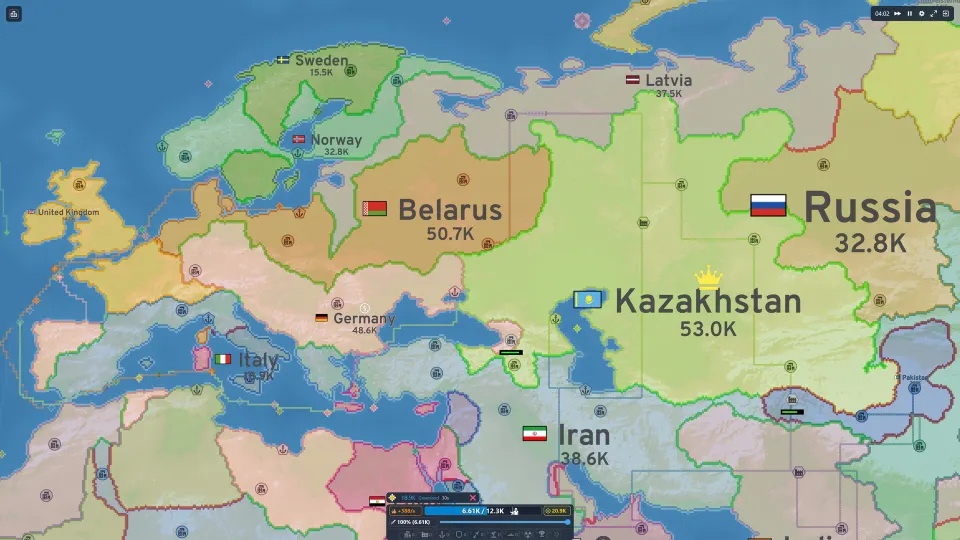
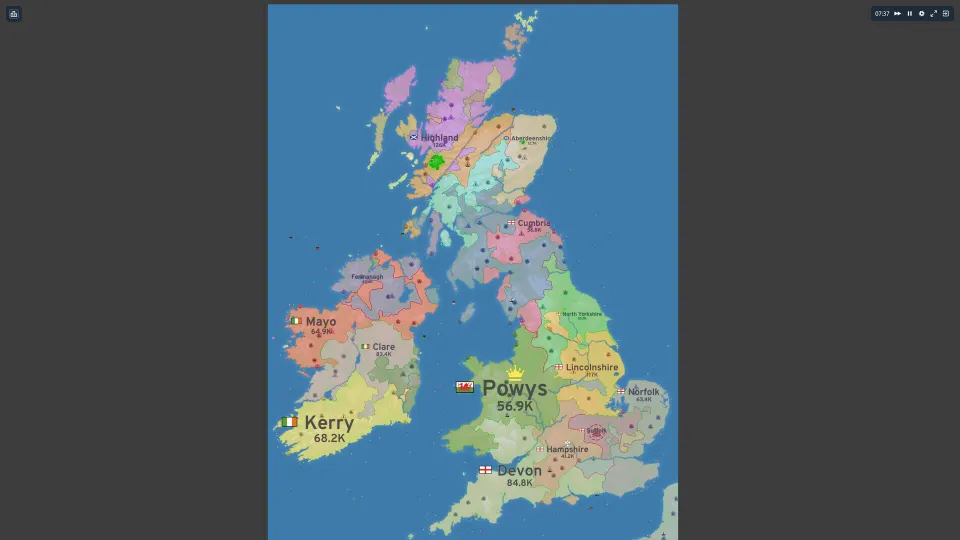
Competitive matches can feel very different from casual lobbies. Experienced players recognize common openings, protect valuable cities, watch the leaderboard, and react quickly when alliances expire. A tournament is not only about winning fights; it is also about avoiding the one bad fight that ends a promising run.
Finding and Joining Events
Discord is the practical starting point for anyone seeking an OpenFront tournament. The official OpenFront community and OpenFront Masters channels are used for tournament announcements, registration instructions, rules, brackets, schedules, and result discussions. Joining a clan can also help players discover smaller events and find teammates.
Before registering, confirm the event’s format, region or start time, team requirements, and whether it has multiple rounds. Some events use a qualification stage before finals, while others run as a single lobby. Do not assume that a casual-game strategy will work without adjustment.
Use this checklist before committing to an event:
- Read the complete rules, including allowed communication and account requirements.
- Confirm the match time in your local time zone.
- Check whether the tournament is free to enter, prize-supported, or uses a special registration process.
- Practice the map and mode if they are announced in advance.
- Join the required Discord channels and enable notifications.
- Ask organizers early if a rule, roster limit, or scheduling detail is unclear.
| Registration detail | Why it matters |
|---|---|
| Discord access | Organizers commonly use it for sign-ups, lobby links, updates, and appeals |
| Format | Free-for-all and team games reward different skills |
| Match cap | A fixed time limit changes how aggressively players must pursue score or position |
| Roster rules | Team events may restrict substitutions, clan representation, or late additions |
| Event timing | Missing check-in can mean losing a tournament place |
Tournament lobbies may use measures that reduce targeting. In some free-for-all events, players receive anonymous or randomized display names so recognizable competitors are less likely to become immediate targets. This does not remove diplomacy, but it makes early decisions rely more on board position and observed behavior.
If you are new, consider entering an open community event before treating a major competition as your first test. The experience teaches you how tournament check-ins work, how quickly the pace changes, and how to manage nerves when every match result counts.
Rules, Fair Play, and Match Structure
OpenFront Masters uses referees who do not participate in the matches they oversee. That separation is designed to keep decisions impartial when rules questions, interference concerns, or possible match-fixing issues arise.
Exact rules vary by event, but competitive play generally depends on a clear expectation: participants should try to win within the stated format without manipulating the outcome outside normal gameplay. Organizers may prohibit cheating, disruptive interference, coordinated result manipulation, and other conduct that undermines a fair match.
| Tournament safeguard | Purpose for players |
|---|---|
| Non-playing referees | Keeps match oversight separate from competition |
| Written rules | Gives participants a shared standard before games begin |
| Anti-cheating measures | Protects legitimate strategic play and standings |
| Restrictions on interference | Prevents outside participants from affecting results |
| Anonymous names in some FFA events | Reduces reputation-based targeting early in a match |
Time limits are another important tournament setting. Competitive OpenFront matches can run much longer than organizers want, especially when skilled players build stable alliances and defensive positions. A time cap keeps a round moving and gives competitors a reason to balance safe growth against immediate results.
For example, tournament free-for-all matches have used caps of around 20 to 25 minutes. Under a cap, waiting for a perfect late-game opportunity can be risky. Players need enough cities, territory, economy, and leaderboard position before the clock makes recovery difficult.
That does not mean attacking constantly. Overextending into a defended opponent can drain troops, expose ports, or invite neighboring players to take your cities. The strongest tournament decisions usually combine controlled expansion with a clear plan for when to switch from growth to conflict.
Playing Better in a Competitive Lobby
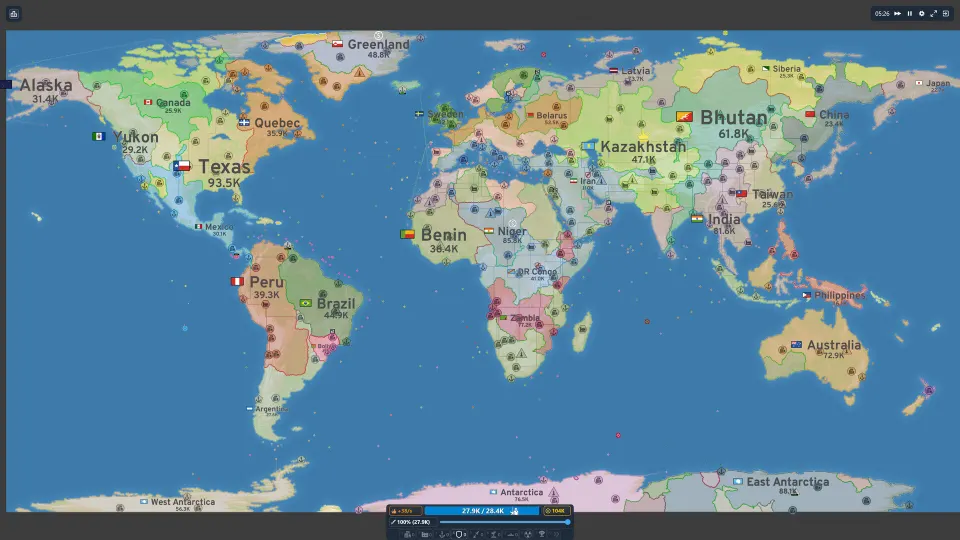
A tournament lobby rewards information management. Watch city counts, nearby structures, water access, alliance status, and the leaderboard instead of focusing only on the territory directly beside you. A player with fewer visible troops may still have enough income, factories, ports, or missiles to reverse a fight.
Early game priorities are usually straightforward: claim useful land, secure cities, remove nearby bots when safe, and avoid becoming an easy target. However, tournament opponents are faster than typical public-lobby players. A delayed annexation or missed city can create a gap that is hard to close.
| Phase | Useful objective | Common mistake |
|---|---|---|
| Opening | Gain land, cities, and safe nearby opportunities | Fighting a strong neighbor too early |
| Midgame | Build economy and identify vulnerable targets | Renewing every alliance without a plan |
| Transition | Improve placement before the time cap | Staying passive while leaders pull ahead |
| Late game | Protect key cities and make decisive gains | Ignoring nuclear or naval threats |
Diplomacy remains valuable, but alliances are tools rather than guarantees. Offer them when they buy safety, create space to expand, or prevent a damaging two-front conflict. Reassess them when the board changes. A rival who was harmless ten minutes ago may become the player holding the crown.
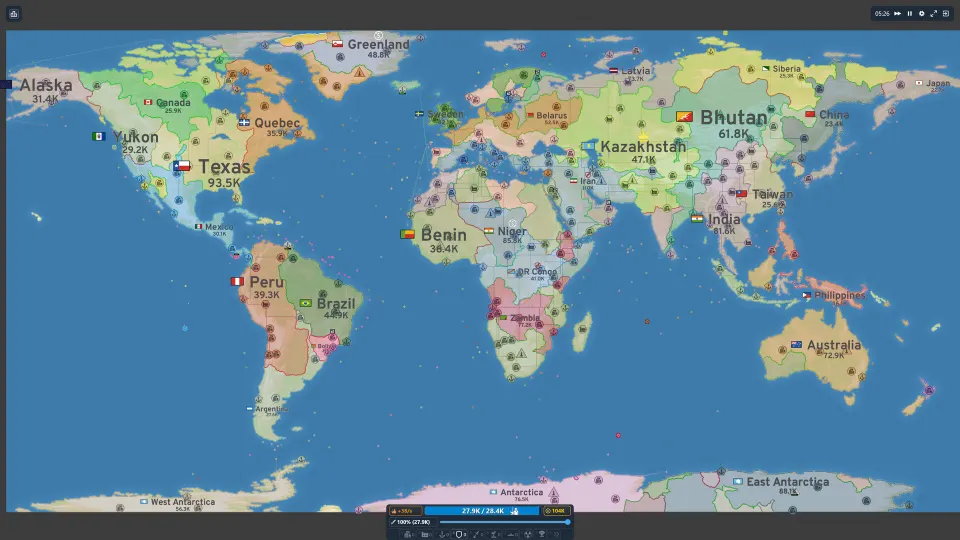
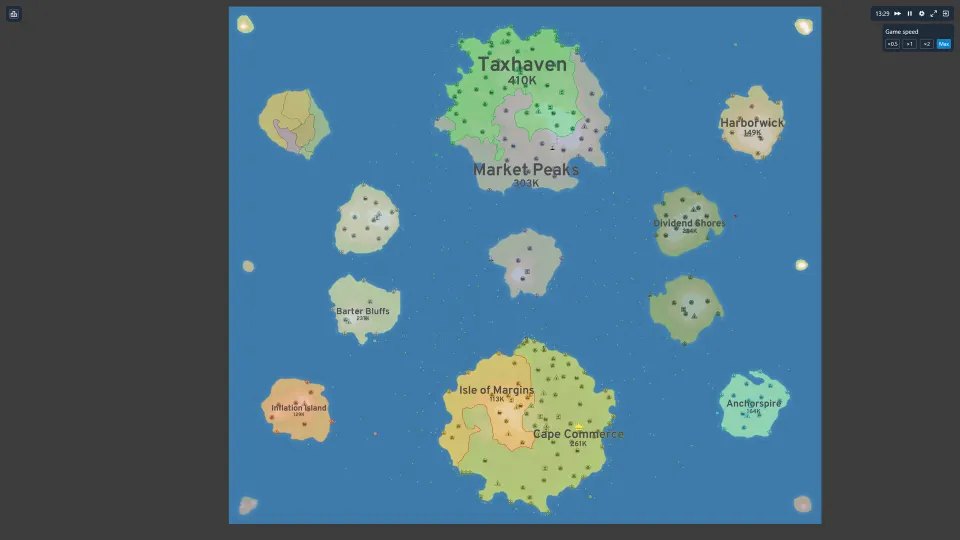
Naval positioning can be particularly important on maps with accessible water. Ports and warships open routes into isolated regions, threaten coastal structures, and let you reach targets beyond crowded land borders. At the same time, an exposed port can become a foothold for someone else, so build only where you can protect or use it.
If the event allows powerful late-game weapons, check enemy structures before committing troops. Missile silos and nuclear attacks can rapidly change a territory balance, especially when cities are clustered. Spread critical infrastructure where possible and avoid assuming that a player who appears passive is unable to strike.
A productive practice routine looks like this:
- Play free-for-all games on the likely tournament map type.
- Review when you lost cities, ports, or momentum rather than only whether you won.
- Practice managing several alliances without losing track of hostile borders.
- Learn to recognize when a leaderboard position requires aggression.
- Watch competitive match videos to see how experienced players respond under a time cap.
FAQ
What is an OpenFront tournament?
An OpenFront tournament is an organized competitive event in OpenFront, usually run through Discord with announced rules, start times, formats, and standings. Events may be official OpenFront Masters competitions or community-run tournaments.
Where can I join an event?
Join the official OpenFront Discord community and OpenFront Masters Discord server. Tournament organizers commonly post registration details, schedules, lobby instructions, and rules there.
Do I need a team?
Not always. Free-for-all tournaments allow individual entry, while duos, trios, and team events require teammates. Check the event announcement before registering.
Are prizes guaranteed?
No. Some events advertise cash prizes or skin rewards, while others are primarily competitive or community-focused. Treat prizes as event-specific and verify the announced terms before entering.
How are tournament matches kept fair?
Events can use written rules, non-playing referees, and restrictions against cheating, interference, and match fixing. Some free-for-all tournaments also use anonymous player names to reduce early targeting based on reputation.
How should I prepare for my first OpenFront tournament?
Read every rule, arrive before check-in, practice the map or mode, and focus on steady expansion rather than reckless early fights. In a timed match, track the leaderboard and adjust your aggression before the final minutes.